AirLine 12V160-3 1 X 60ft complete set
Thomas Industries once again comes through for The Air Line with a tough compact, single-head compressor that goes beyond -- actually, way below -- diving just under the hull. Terrific option for sail boaters, power boaters who don't want to carry gas, and metal detectives who want to keep a low, quiet profile. What better way to do those really fun projects like scraping barnacles, changing zincs, chopping line off the prop. No tank to bop the gel coat, no yo-yoing up and down til your lungs give out.
- Performance: 3.25 CFM @ 0PSI, 2.18 @ 50. One to depth of 50 feet. *See Foot Note
- Motor: .1/3 HP DC. Rated Load: 26 AMPS.
- Recommended Battery: Group 31 Marine. (Expect two hours of operation.) Group 27. (Expect one hour, 20 minutes.) One D-Cell. (Expect ridicule.) Running the boat engine will keep the battery charged.
- CAUTION: Exhaust fumes from other resources are toxic. (outboards, generators etc.) Ensure that the intake air is uncontaminated. A low-cost, remote air intake hose can be ordered.
- Weight: 23 lbs. Size: 12" by 8" by 6" high on white, rubber feet. (Allow 19" L for hose bend, cables and overpressure, Quiet Valve)
Mounting Notes: The compressor can be custom mounted in any position.
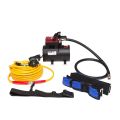
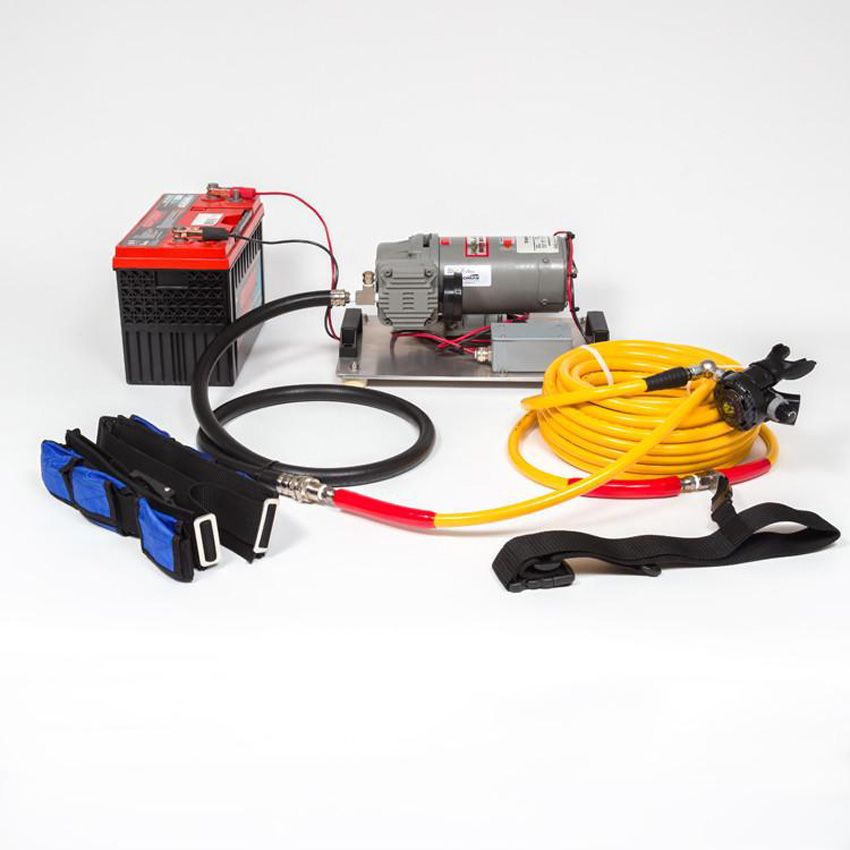
The Standard gear Package:
- 1 Air Line/Thomas 12 volt Single Piston Compressor
- 1 5' US Navy heat hose w/ over pressure valve
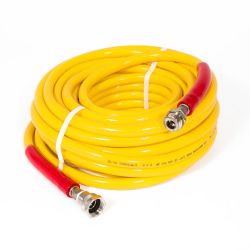
- 1 60' fully swiveled, individual diver hose
- 2 Washable, stainless-steel particle filters
- 1 Tow Belt
- 1 Weight Belt
- 1 Adjustable, hookah-specific, 2nd stage regulator w/fully rotational, 360º swivel
- 1 Owners manual
Footnote:
Understanding 12 Volt/DC, its limitations and proper usage as an air-breathing device under water.
The Air Line Model 12V160-3, just as it comes from the factory, is an excellent and efficient tool for providing breathing air in the situations for which it is intended: The sailor who needs to work on the hull when underway. The metal detector user searching for treasure (perceived, or otherwise) in the lake or river.
It's important, however, to understand that the performance of a 12Volt compressor is directly related to its AMP draw. AMP is loosely defined as being the strength of electric current. The higher the AMPS, the stronger the current, therefore the stronger the power. Breathing at any level, even at the surface, requires both pressure and volume.
The problem is that at some point, it is impractical to supply the strength to accomplish the job due to battery sizes. Battery banks on large boats, or keeping the motor running will accommodate the AMP power needed for larger compressors. Gas or 110Volt/AC powered units start off with considerable "strength" and are, therefore, more able to overcome resistance within their given parameters.
Understanding the limitations of the 12V system will arm you with the knowledge to use it safely and efficiently.
As a preface, the Air Line has elected to offer a system based upon reasonable performance and the power needed to make it work within its limitations. Model 12V160-3 has a "draw" of 26 AMPS. Fairly high, but not impractical (see the website for recommendations on battery size).
Under hard exertion, at even shallow depths, it is possible to "breathe down" the compressor (consume air at a rate higher than the compressor can generate). The situation can be eased or prevented by slowing down (or even stopping) the activity and allowing the compressor to regenerate air into the hose, rest until breathing is normal, and then establish a pace at which there is no hesitation on the inhalation effort.
Follow these steps initially: Start the compressor, without load, by holding in the purge button on the regulator front (where the logo is). Hold for a few seconds to allow the air to travel from compressor to reg, to get a sense of the air flow. Release the purge and wait several seconds until the hose fills with air and the overpressure valve on the compressor is evacuating the generated air. If you depress the purge as though you are taking a breath, you will note that the air volume is considerably higher than at the start up. The reason for this is simply because you are breathing air from the hose, which acts like a reservoir, rather than directly from the compressor.
Labored breathing from heavy exertion means that the reservoir (hose) is being drained faster than it can supply.
The most positive fix, in preventing over breathing, is the incorporation of an accumulating tank at, or near, the compressor. The tank does not have to be large to be effective for a single diver under heavy exertion. The Accessories page on the website describes a 2-1/2 gallon, light-weight, stainless steel tank that perfectly fits the criteria of adding significant reservoir to the hose volume.
Initial testing was done without an accumulator and at a depth of 60 feet. The activity was very low. Moderate exertion caused labored breathing as the ambient pressure from the water was starting to counterbalance the pressure generated from the compressor. More realistic testing was done at a depth of 15 feet, again, without an accumulator, with a swimmer using a metal detector. Breathing was unlabored.
Thus fortified, with the information above, you can now fully utilize the Model 12V160-3 in all its quiet, fumeless glory.
AirLine 12V160-3 1 X 60ft complete set
Thomas Industries once again comes through for The Air Line with a tough compact, single-head compressor that goes beyond -- actually, way below -- diving just under the hull. Terrific option for sail boaters, power boaters who don't want to carry gas, and metal detectives who want to keep a low, quiet profile. What better way to do those really fun projects like scraping barnacles, changing zincs, chopping line off the prop. No tank to bop the gel coat, no yo-yoing up and down til your lungs give out.
- Performance: 3.25 CFM @ 0PSI, 2.18 @ 50. One to depth of 50 feet. *See Foot Note
- Motor: .1/3 HP DC. Rated Load: 26 AMPS.
- Recommended Battery: Group 31 Marine. (Expect two hours of operation.) Group 27. (Expect one hour, 20 minutes.) One D-Cell. (Expect ridicule.) Running the boat engine will keep the battery charged.
- CAUTION: Exhaust fumes from other resources are toxic. (outboards, generators etc.) Ensure that the intake air is uncontaminated. A low-cost, remote air intake hose can be ordered.
- Weight: 23 lbs. Size: 12" by 8" by 6" high on white, rubber feet. (Allow 19" L for hose bend, cables and overpressure, Quiet Valve)
Mounting Notes: The compressor can be custom mounted in any position.
The Standard gear Package:
- 1 Air Line/Thomas 12 volt Single Piston Compressor
- 1 5' US Navy heat hose w/ over pressure valve
- 1 60' fully swiveled, individual diver hose
- 2 Washable, stainless-steel particle filters
- 1 Tow Belt
- 1 Weight Belt
- 1 Adjustable, hookah-specific, 2nd stage regulator w/fully rotational, 360º swivel
- 1 Owners manual
Footnote:
Understanding 12 Volt/DC, its limitations and proper usage as an air-breathing device under water.
The Air Line Model 12V160-3, just as it comes from the factory, is an excellent and efficient tool for providing breathing air in the situations for which it is intended: The sailor who needs to work on the hull when underway. The metal detector user searching for treasure (perceived, or otherwise) in the lake or river.
It's important, however, to understand that the performance of a 12Volt compressor is directly related to its AMP draw. AMP is loosely defined as being the strength of electric current. The higher the AMPS, the stronger the current, therefore the stronger the power. Breathing at any level, even at the surface, requires both pressure and volume.
The problem is that at some point, it is impractical to supply the strength to accomplish the job due to battery sizes. Battery banks on large boats, or keeping the motor running will accommodate the AMP power needed for larger compressors. Gas or 110Volt/AC powered units start off with considerable "strength" and are, therefore, more able to overcome resistance within their given parameters.
Understanding the limitations of the 12V system will arm you with the knowledge to use it safely and efficiently.
As a preface, the Air Line has elected to offer a system based upon reasonable performance and the power needed to make it work within its limitations. Model 12V160-3 has a "draw" of 26 AMPS. Fairly high, but not impractical (see the website for recommendations on battery size).
Under hard exertion, at even shallow depths, it is possible to "breathe down" the compressor (consume air at a rate higher than the compressor can generate). The situation can be eased or prevented by slowing down (or even stopping) the activity and allowing the compressor to regenerate air into the hose, rest until breathing is normal, and then establish a pace at which there is no hesitation on the inhalation effort.
Follow these steps initially: Start the compressor, without load, by holding in the purge button on the regulator front (where the logo is). Hold for a few seconds to allow the air to travel from compressor to reg, to get a sense of the air flow. Release the purge and wait several seconds until the hose fills with air and the overpressure valve on the compressor is evacuating the generated air. If you depress the purge as though you are taking a breath, you will note that the air volume is considerably higher than at the start up. The reason for this is simply because you are breathing air from the hose, which acts like a reservoir, rather than directly from the compressor.
Labored breathing from heavy exertion means that the reservoir (hose) is being drained faster than it can supply.
The most positive fix, in preventing over breathing, is the incorporation of an accumulating tank at, or near, the compressor. The tank does not have to be large to be effective for a single diver under heavy exertion. The Accessories page on the website describes a 2-1/2 gallon, light-weight, stainless steel tank that perfectly fits the criteria of adding significant reservoir to the hose volume.
Initial testing was done without an accumulator and at a depth of 60 feet. The activity was very low. Moderate exertion caused labored breathing as the ambient pressure from the water was starting to counterbalance the pressure generated from the compressor. More realistic testing was done at a depth of 15 feet, again, without an accumulator, with a swimmer using a metal detector. Breathing was unlabored.
Thus fortified, with the information above, you can now fully utilize the Model 12V160-3 in all its quiet, fumeless glory.


 1.800.999.3483