![]() |
Need help?
|
|
|||||||||
| |||||||||||
Shop with confidence!
Best Price Guarantee
Superior Selection
Full Warranty
Secure Shopping
40+ Years|Since 1977
When you go diving without a camera of any type, you leave behind every wonderful sight of coral reefs, ship wrecks, and underwater life the moment you emerge from the water. But with the right equipment, all of that changes. It doesn't matter if you are a novice snorkeler or an experienced professional diver: an underwater camera is no longer considered just an additional piece of equipment to have, alongside your tank, mask, and flippers. Rather, it's a key item for photos, videos, and for your blog or social media posts, and there are more choices in this field than ever before.
In our guide, we'll go into detail on what is really important to consider when choosing an underwater camera, how to choose the setup that best suits your needs, which features you should look for to get the most out of your experience, and what's just marketing. We will also discuss specific gear types, including smartphone and dedicated camera rigs, so you will know exactly which camera and equipment to look for.
The use and interest in underwater photography and underwater video have exploded recently with the advent of modern digital camera systems, and people wanting to document their dives. This increased demand has led manufacturers to invest more in underwater imaging, so that consumers may access better-quality sensors, stronger seals, and more advanced editing software.
Typically, brand recognition is not the biggest factor when you purchase an underwater camera. The real challenge is getting a top-grade image or video, and the features below will determine that.
Every single underwater camera has a maximum depth limit. If you exceed this, you will flood and ruin an expensive camera. A typical underwater camera may have a depth rating of around 50 feet, but when paired with a dedicated underwater housing, it can reach about 147 feet, which is enough to cover most recreational diving limits.
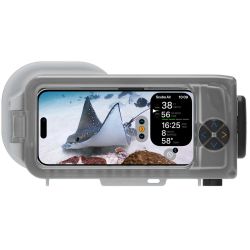
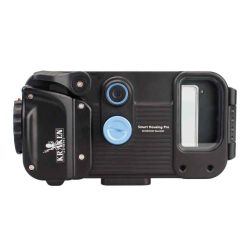
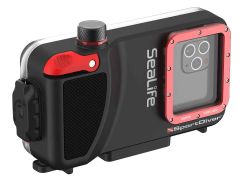
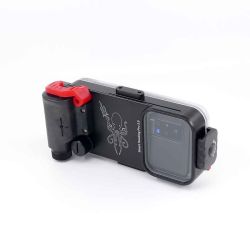
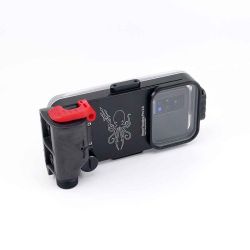
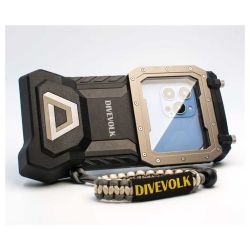
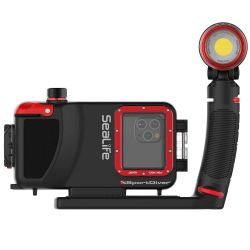
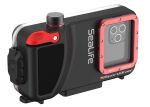
If you choose to film with a certified underwater smartphone housing (the lowest-cost entry point), it will achieve the same depth. Smartphone housings like the SeaLife SportDiver underwater housing series have a depth rating of 130 feet and feature double leak alarms, giving you complete peace of mind.
Your choice of lens will dramatically affect the types of shots that you can accomplish. A wide-angle lens is your default choice for shooting large objects, such as wrecks, kelp forests, and big schools of fish. It allows you to shoot up close and still capture the entire object in a single shot, and it reduces any haze kicked up by water particles in the column.
The macro lens, on the other hand, is specifically designed for shooting small marine life and other similar reef species. The majority of compact cameras come with a fixed wide-angle lens that offers a 100-degree field of view. This will cover most wreck and reef photo work without the need to change lenses during the dive.
The size of the camera's sensor and its accompanying resolution still matter for quality, but lighting is more important when you go underwater. For instance, a 16-megapixel camera with powerful lighting will perform better than a higher-resolution camera without lighting. This is the single biggest mistake that first-timers make when choosing a camera: going for megapixels and forgetting about light.
The latest cameras can handle both photo and video, but not necessarily with the same quality. While action cameras such as the DJI Osmo range prioritize shooting smooth, stabilized 4K video, they do not perform as well with RAW or zoomed-in still photos. The compact ranges offer the opposite, with excellent stills but only moderate video quality. If you need a camera that offers both high-quality video and stills, you should expect to pay more or look for an even trade-off.
Light is heavily filtered underwater, and colors suffer as a result. Under 15 feet, red wavelengths disappear completely. Below that point, everything becomes a blue-green if not corrected. Flash units built into the housing will help with lighting near subjects, but will cause backscatter, a snowstorm effect on wide shots. Backscatter occurs when particles are illuminated in your pictures.
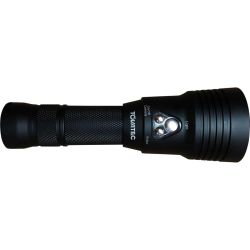
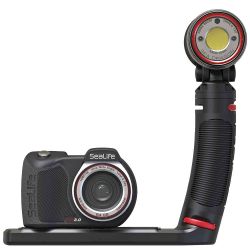
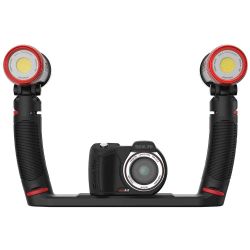
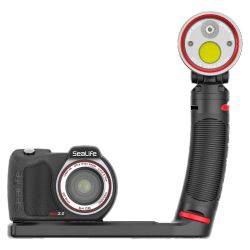
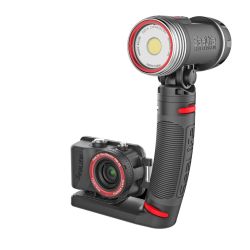
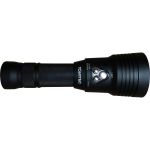
To combat this, you need external light sources. An external video light will provide consistent lighting for filming, helping capture better motion. A strobe will fire a burst of light for stills, like a regular flash. Professional divers often use dual video lights mounted on arms to achieve even lighting without shadows. If you want to take photographs in caves, wrecks, or during night dives, lighting is a must.
Picking a camera that aligns exactly with your diving style is more important than choosing the latest model. Here is what you need to consider.
If you are new to diving or shopping on a budget, the best place to start is with a smartphone housing. This option lets you simply slip your phone into a waterproof case and begin shooting underwater immediately.
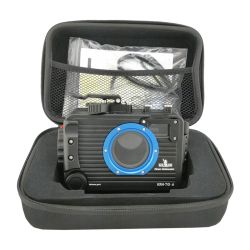
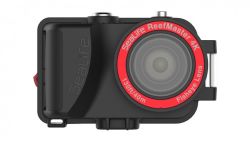
If you are considering a rugged, dedicated camera system, a compact adventure camera might be the best bet. They typically come equipped with a 12-megapixel camera, 4K video, macro focus down to about an inch, and enough toughness to withstand boat decks and gear bags. With a matching underwater housing, this setup will cover you way below the normal recreational depths.
For the best video quality, you should look at the action camera range. These types of cameras are designed for movement, drift dives, currents, high-speed free dives, and situations that require stability over manual exposure capabilities. They are small, durable, and work really well at 4K resolution, though their photo settings tend to be less versatile than those of a dedicated camera.
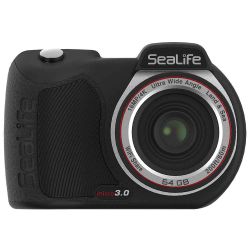
If you need the best all-around photo and video quality, the best choice is a compact camera designed specifically for diving. These cameras have completely sealed housings, no o-rings, and come with glove-friendly buttons. They offer the best all-around image quality and ease of use, giving good macro and wide coverage. They can shoot JPEG and RAW, giving you better options at the editing stage.
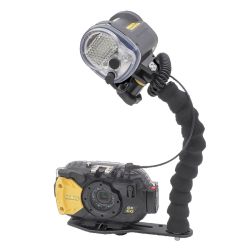
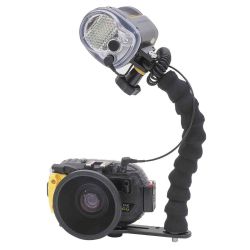
Regardless of your final camera choice, don't stop there. Combine it with the correct accessories, such as a tray with an arm system for additional stability, a red filter to compensate for the loss of warm colors at depths below 15 feet, and at least one deep-dive-rated light source rated to your intended depth. You will find that scuba gear retailers gather all of these items in ready-made kits, which offer great savings when you buy a bundle. Purchasing these accessories individually is more expensive, and you could run into incompatibility issues with mounts.
For a deeper dive, we supply (no pun intended) several makes and models across different budgets. Our team has tested and ranked the top picks in our guide to the best underwater camera for every dive, covering all types of cameras and rigs ranging from budget/beginner kits right through to advanced rigs for content creators.
Are you ready to gear up and dive in? Check out our full range of dive-ready camera systems, housings, and lights in stock, and take advantage of our free shipping offers on selected items. Whether you're planning to go reef diving and need a suitable camera or are looking for a rugged action camera for amazing video work, our team of experts can assist you in finding the right choice for you.
Your best starting point is with a certified smartphone housing, such as the SeaLife SportDiver. This housing is affordable, fits a standard smartphone, and will go down to depths that cover most recreational diving.
If you dive beyond 15 or 20 feet, then a built-in flash will not be enough for clear images, as it will cause backscatter. If you opt for a dedicated video light or strobe, they will offer much better image results, especially on wrecks, caves, and night dives.
Most recreational divers stay between 60 and 100 feet deep, so the camera housing should be rated to 130 feet to give you good leeway. Deep divers should shop for depth ratings closer to 200 feet.
Yes, you can. A smartphone can be used safely underwater if it is encased in a certified diving housing with a confirmed depth rating and a leak alarm. However, don't place a phone into a generic waterproof bag that is only splash-proof!
Action cameras are OK for standard-quality photos but are more geared towards video quality. If high-resolution stills are your main goal, a dedicated compact will give you much better results.